See it first
We notice how a space is used before suggesting how it might change. Observation comes before opinion.
Systems are easy to admire and hard to keep. Our method tries to stay light enough that you can actually live with it. What follows describes how we think; it is general information, not a rulebook.
We notice how a space is used before suggesting how it might change. Observation comes before opinion.
A handful of clear decisions usually outlasts a complicated system that needs constant upkeep.
Items are easiest to find when they live near the moment they are needed, not by category alone.
Good arrangements can be undone. Nothing we discuss should feel permanent or irreversible.
Your habits are information, not faults. We work with them rather than trying to replace them.
We share ideas and observations. We do not promise outcomes or give professional advice of any kind.
The studio grew out of practical work: helping a friend's home office, then a small design team, then a shared community space. Each time, the lessons were similar enough to write down.
Over the years those notes became a way of working — observational, unhurried, and careful not to overstate what arranging a space can do. We are organizers and facilitators, and we say so openly.
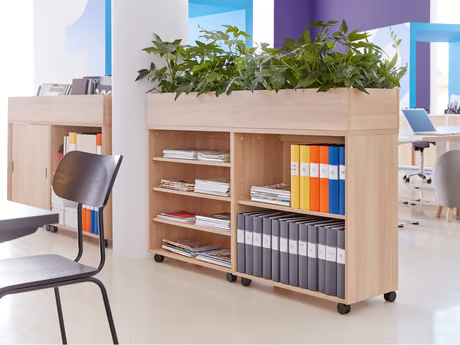
Instead of sorting by type, we often sort by how often something is touched: daily, weekly, seasonally, almost never. The rarely used can move further away.
When every item has a single, agreed home, tidying becomes returning rather than deciding.
If a task takes under five minutes, doing it now often beats filing it for later.
For digital files, fewer layers usually means faster finding.
We provide general, educational information about organizing physical and digital workspaces. Our conversations are reflective and practical.
We do not offer medical, psychological, legal or financial advice, and we describe no health-related effects of any kind. If a question falls outside organizing a space, we will say so and suggest you speak with an appropriate professional.
Think of the studio as a thoughtful sounding board for your space — nothing more, and nothing dressed up to seem like more.
Reach out and tell us what you are working with. We will reply with a few ways to continue the conversation.